I'm excited to announce that I've co-founded a JavaScript and Game Development course at the South Regional/Broward College Library! This has been a dream of mine for a while, and seeing it come to life has been incredible. Here's how it all happened.
The Idea
After learning JavaScript and building my own games, I wanted to share what I'd learned. But where do you start when you're a high school student? I couldn't exactly open my own coding school.
Then I realized: libraries! Libraries are community centers that offer all sorts of programs. Why not a coding class? I approached the South Regional Library with my idea, expecting to be turned away. Instead, they were enthusiastic.
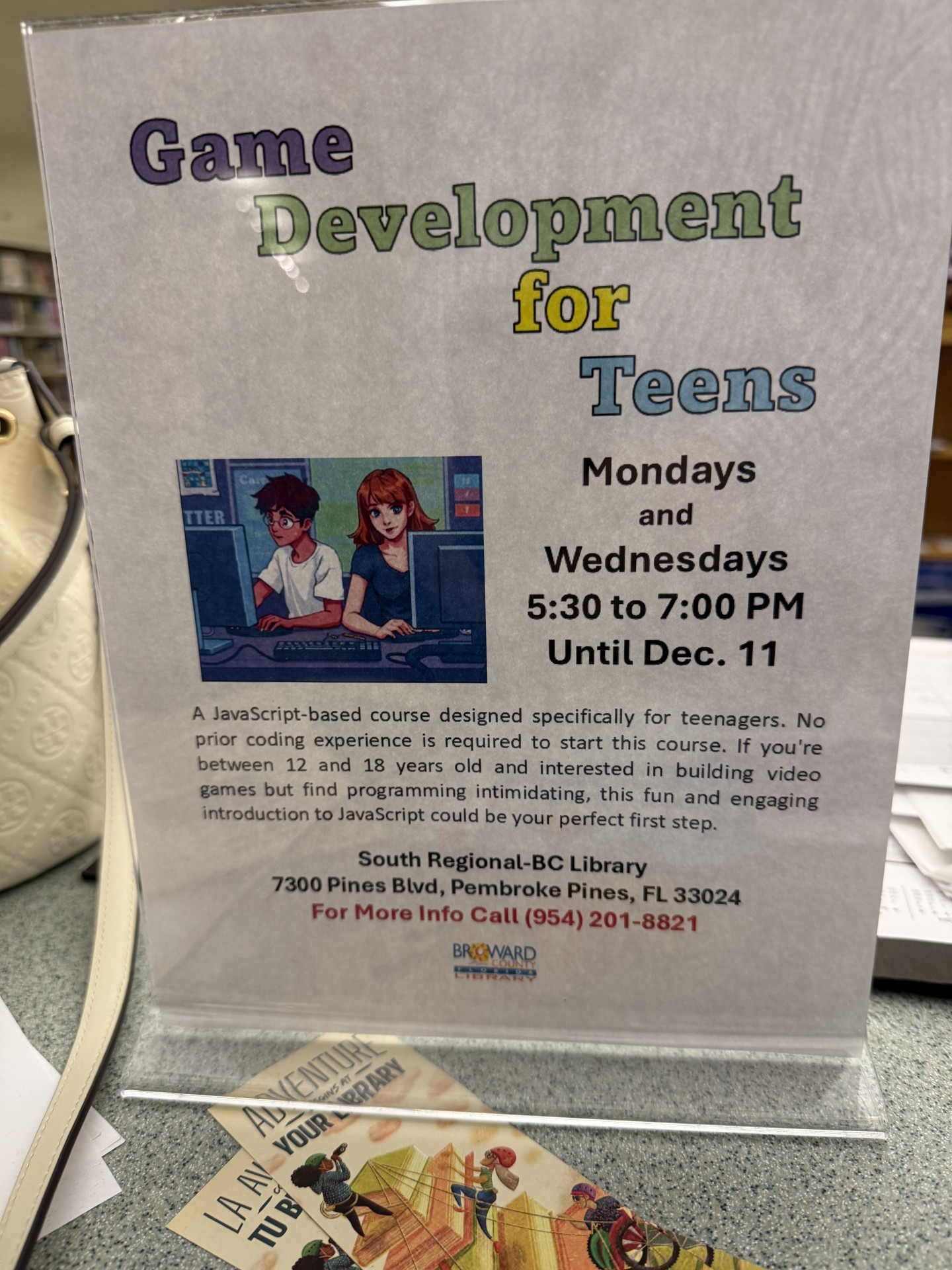
Class announcement at the library
Making It Happen
Turning an idea into reality required more work than I expected. I needed to:
- Create a curriculum that was engaging but not overwhelming
- Design hands-on projects that students could complete in class
- Prepare materials and resources for students to take home
- Coordinate with library staff on scheduling and logistics
- Promote the class to get students to sign up
I worked with a friend who shared my passion for teaching, and together we built the course from scratch. We spent weeks refining our lesson plans, testing our projects, and preparing for every possible question students might ask.
The Curriculum
Our course focuses on JavaScript because it's beginner-friendly and immediately rewarding. Students can see their code run in a web browser without installing anything complicated.
We structured the course around building progressively more complex projects:
- Week 1-2: JavaScript basics and drawing with code
- Week 3-4: Interactive animations and user input
- Week 5-6: Building simple games like Pong
- Week 7-8: More complex game mechanics and final projects
Every lesson includes hands-on coding time. We don't just lecture - we code together, debug together, and celebrate when things work.
The First Class
I was nervous on the first day. What if no one showed up? What if my teaching style didn't work? What if students found it boring? I arrived early, set up my laptop, and waited.
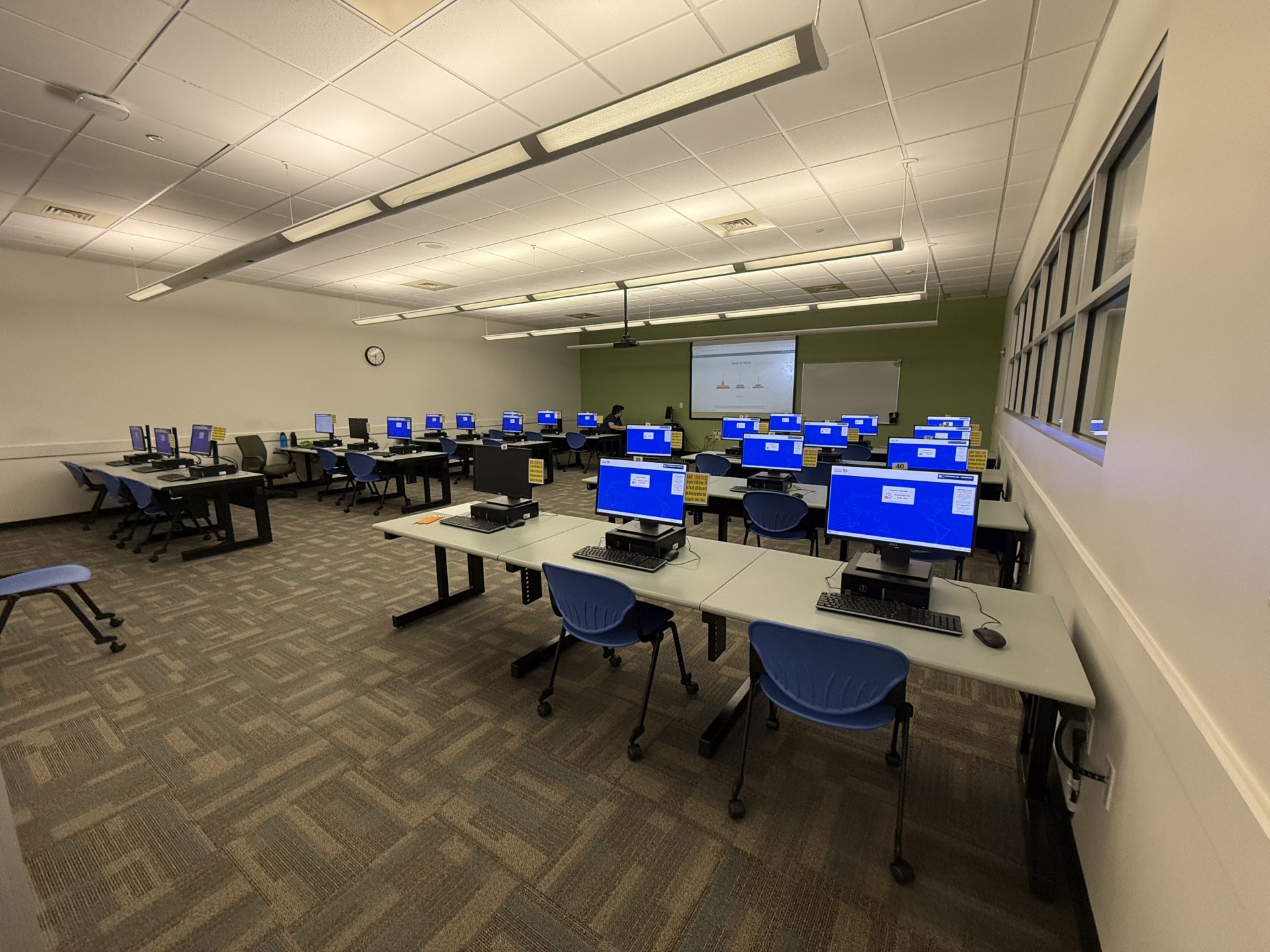
Waiting for students to arrive
But when the time came, twelve students walked in excitedly. All my worries melted away. We introduced ourselves, talked about why we wanted to learn coding, and jumped right into writing our first JavaScript program.
By the end of the first session, every student had created a simple drawing program. They could click on the screen and draw colored circles. It was basic, but you should have seen their faces light up when they realized they'd just written their first program.
Challenges and Lessons
Teaching isn't as easy as I thought it would be. Students learn at different paces. Some grasp concepts immediately; others need more explanation. Some are comfortable with computers; others have never written code before.
I learned to:
- Be patient and never make students feel bad for asking questions
- Prepare extra challenges for fast learners
- Break down concepts into smaller, digestible pieces
- Use analogies and real-world examples to explain abstract ideas
- Celebrate small victories - every working program is an achievement
The Impact
Seeing students progress from complete beginners to building their own games has been the most rewarding experience. One student created a space shooter game and showed it to her entire family. Another is now considering computer science as a college major.
But beyond individual success stories, what makes me proudest is creating a community. Our students help each other, share ideas, and encourage one another. They've formed a study group that meets even outside class time.
Expanding the Program
The success at South Regional Library led to opportunities at other locations. We've now started similar programs at the Alvin Sherman Library at Nova University and even in an elementary school aftercare program.
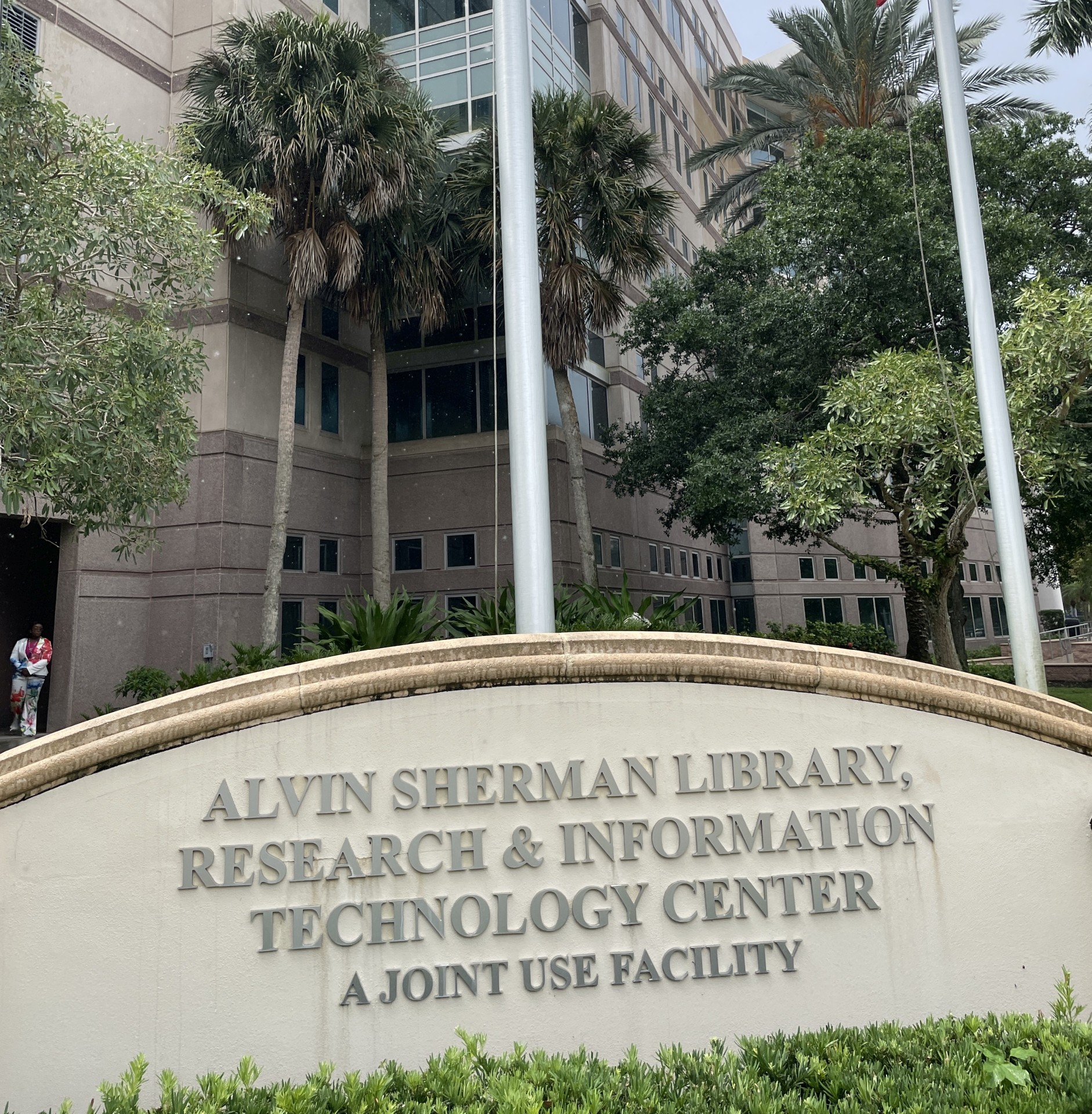
Alvin Sherman Library - where I teach coding
Each location presents unique challenges and opportunities. Teaching elementary students requires different approaches than teaching teens. But the core mission remains the same: make coding accessible and fun for everyone.
Want to Start Your Own Class?
If you're passionate about something and want to teach others, here's my advice:
- Start local - libraries, community centers, and schools are always looking for volunteers
- You don't need to be an expert - you just need to know more than your students
- Start small and grow gradually
- Prepare thoroughly, but be flexible - not everything will go as planned
- Focus on engagement over perfection
Looking Forward
This journey has taught me that knowledge becomes more valuable when shared. Every student I help learn to code is someone who might go on to create amazing things, solve important problems, or teach others in turn.
Teaching coding at Broward Library started as a way to give back to my community. It's become so much more - a passion, a mission, and a glimpse of what I hope to do for the rest of my life.
If you're in the South Florida area and interested in learning JavaScript, come join us! And if you're anywhere else and want to start something similar, reach out - I'd love to share what I've learned.